Flue gas treatment is especially important in medical waste incineration facilities, where emission limits and biosafety requirements are particularly stringent.
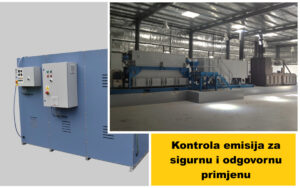
In municipal and industrial waste incineration plants, pollution control systems for incinerators is essential for long-term regulatory compliance and stable system operation.
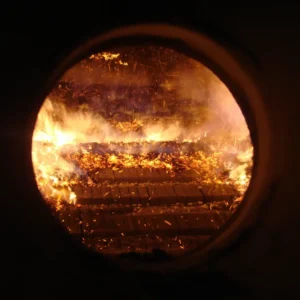

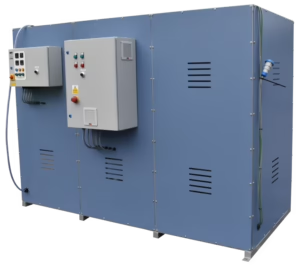
The Venturi scrubber system enhances emission control performance by providing an additional stage of flue gas cleaning..
This wet scrubbing technology complements the secondary combustion chamber, delivering an extra level of particulate removal that is particularly effective in reducing fine particles and residual contaminants.
The operating principle of the Venturi scrubber is based on accelerating the flue gas stream through a constricted throat section, which increases gas velocity and generates intense turbulence. In this zone, water is injected under pressure into the gas stream, allowing particulate matter and soluble pollutants to bind with liquid droplets. The resulting mixture is then separated, enabling effective removal of contaminants before the treated gas is discharged through the chimney.
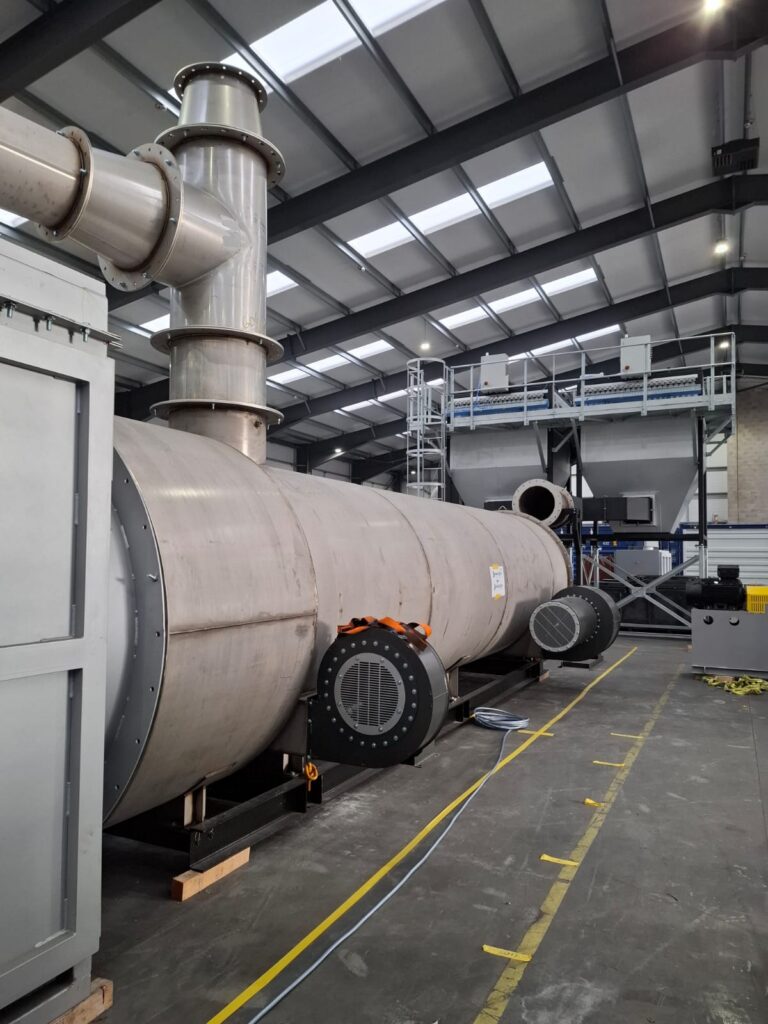
For operators requiring the highest level of emission control, the pollution control systems for incinerators (PCS) combined with a heat exchanger represents a comprehensive flue gas treatment solution.
This advanced configuration includes:
More than 800 ceramic filter elements for high-efficiency particulate removal
A cylindrical heat exchanger designed for rapid flue gas cooling
Optional chemical dosing using sodium bicarbonate, hydrated lime, and activated carbon
Following treatment in the secondary combustion chamber, flue gases are rapidly cooled within the heat exchanger. This rapid temperature reduction plays a critical role in preventing the de novo formation of harmful compounds such as dioxins and furans.
After cooling, the flue gas is exposed to alkaline reagents to neutralise acidic components and capture acid gases. The treated gas is then drawn through the ceramic filtration system by a high-performance induced draft fan.
The filtration unit is equipped with an automatic cleaning mechanism to ensure stable filtration efficiency, long-term operational reliability, and reduced maintenance requirements.
This multi-stage flue gas treatment approach enables a high level of emission control and supports compliance with stringent environmental standards under defined operating conditions.
Effective emission control is essential in waste incineration to ensure the destruction of harmful organic compounds and to prevent the formation of persistent pollutants such as dioxins and furans.
Three key operating conditions are required to minimise the risk of re-formation and to support the effective breakdown of these compounds, particularly in the presence of heavy metals that may act as catalysts:
Homogeneous high temperature (typically > 850 °C)
Adequate excess oxygen (generally > 6%)
Sufficient residence time at elevated temperatures
Only when these parameters are maintained in a controlled and stable manner can the effective oxidation of dioxins, furans, and similar gaseous components be achieved.
When treating more volatile or hazardous waste streams — such as medical waste or waste with a high plastic content — additional flue gas treatment equipment may be required. Technologies such as Venturi scrubbers or a comprehensive Pollution Control System (PCS) provide enhanced emission control performance and support regulatory compliance under stricter environmental standards.
Emission control requirements for waste incineration within the European Union are defined under the EU Industrial Emissions Directive (2010/75/EU), which establishes strict operational and emission limit standards for incineration plants.
Initial Assessment
Inciner8’s technical team conducts a detailed evaluation of the facility’s emission profile and specific pollution control requirements, taking into account waste type, operational parameters, and applicable regulatory standards.
Development of a Tailored Solution
Based on the assessment, we design a customised emission control system aligned with your operational needs and engineered for seamless integration into existing incineration processes.
Implementation of Advanced Technologies
Our qualified technicians carry out the installation, commissioning, and system optimisation to ensure reliable performance from the outset.
Operator Training
We provide comprehensive training to ensure that operating personnel can safely, efficiently, and independently manage and maintain the pollution control system.
Ongoing Support and Performance Monitoring
Our involvement extends beyond installation. We offer continuous technical support and system performance monitoring to ensure long-term reliability, regulatory compliance, and optimal operational efficiency.
For more information …
Contact us
Follow Us
Quick Links